White-rumped vulture reaches Kangra from Nepal
An endangered White-rumped Vulture traveled 600km from Nepal to Himachal's Kangra, signaling the district's move toward becoming a vulture safe zone.
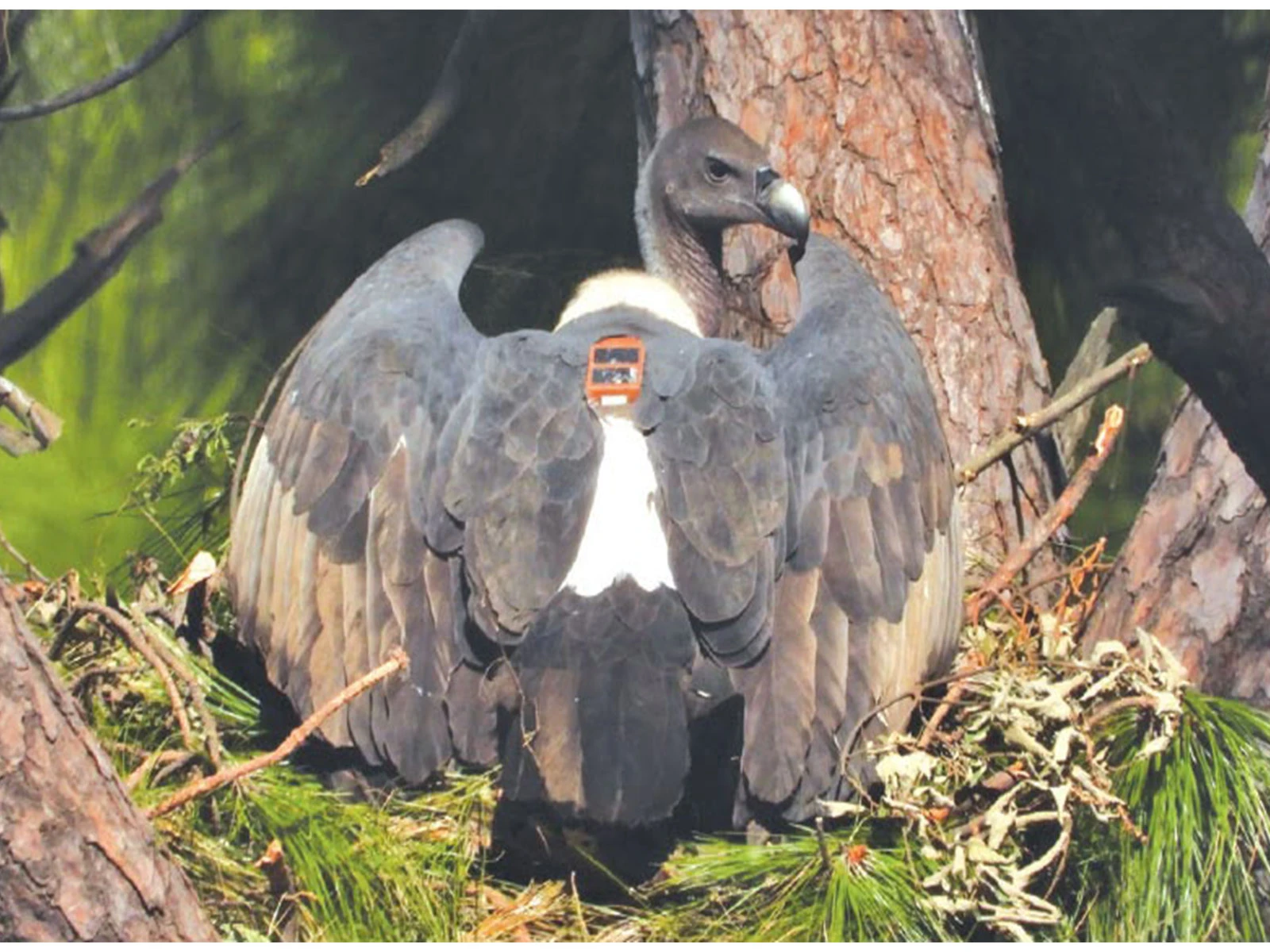
In a remarkable feat of nature, a satellite-tagged White-rumped vulture reaches Kangra after a grueling 600-kilometre journey from Nepal. The endangered bird was spotted at the Pong Dam Wildlife Sanctuary, a discovery that comes as the Kangra district moves closer to being officially designated as a safe zone for vultures.
The rare bird was fitted with a satellite transmitter in Nepal's Shuklaphanta National Park and has been under continuous monitoring by wildlife experts. Its movement through Uttarakhand towards Himachal Pradesh was tracked via satellite data, eventually leading to its sighting on November 4. Bird expert Dr. Malyashree Bhattacharya spotted the vulture at a nest in the Pong wetland, where it was seen alongside its mate, suggesting the bird has successfully established a nesting site in the sanctuary.
A massive boost for vulture conservation
The arrival of this critically endangered species is a significant development for the region, especially since the White-rumped Vulture had previously faced near-extinction in Himachal Pradesh. The increasing number of nests in the area points to highly favourable habitat conditions and successful conservation efforts.
- Historical Data: In 2004-05, only 26 vulture nests were documented in the district.
- Current Progress: More than 615 nests have now been recorded in Kangra.
Reginald Royston A., the Divisional Forest Officer (Wildlife) for the Hamirpur Circle, confirmed that the process of declaring Kangra a designated safe zone is almost complete. He noted that the bird's journey through several safe zones in Nepal before reaching Kangra highlights the importance of regional conservation corridors.
"The presence of this White-rumped Vulture is an important development from the wildlife conservation perspective. Kangra is steadily emerging as a safe zone, reflecting a significant improvement in population and breeding activity," said Reginald Royston.
Establishing Kangra as a safe zone is expected to strengthen protection for resident vultures and provide a secure habitat for migratory species, ensuring the long-term survival of these vital birds in the Himalayan ecosystem.