NNC/FGN Questions Nagaland Statehood Legitimacy
The NNC/FGN has challenged the 1963 formation of Nagaland, calling for international oversight on future political settlements.
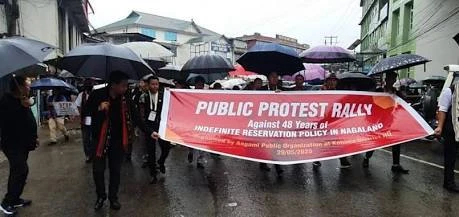
As Nagaland prepares to mark its Statehood Day on December 1, a significant political challenge has emerged. The Naga National Council/Federal Government of Nagaland (NNC/FGN), led by Zhopra Vero, has released a provocative public statement questioning the very foundation of the state's creation in 1963.
In a statement titled "Statehood at What Cost? The Unfinished Question of Naga Self-Determination," issued on November 17, 2026, the organization argues that the 16-Point Agreement failed to fulfill the historical aspirations of the Naga people. The NNC/FGN contends that the administrative concessions and financial assistance provided by the Government of India are merely temporary measures and cannot serve as a substitute for a genuine, formal political settlement.
Demands for International Oversight
The organization also expressed deep skepticism regarding the permanence of Article 371A, arguing that these constitutional protections remain vulnerable to arbitrary changes by the Indian state. To address this, the NNC/FGN is calling for any future political agreements to be monitored by an internationally recognized body or a consortium of credible institutions to ensure they are strictly followed.
The group's stance is rooted in a long historical trajectory, citing several key milestones in the Naga struggle:
- The 1929 Naga Club memorandum to the Simon Commission.
- The declaration of independence on August 14, 1947.
- The 1951 Naga Voluntary Plebiscite.
Furthermore, the NNC/FGN alleged that the 1957 establishment of the Naga People's Convention, which eventually led to the 16-Point Agreement, was the result of political maneuvering rather than a true reflection of the people's will.
While these political tensions rise, the state government in Kohima is moving forward with preparations for the December 1 celebrations. The festivities are set to coincide with the 27th Hornbill Festival, scheduled from December 1 to December 10. To facilitate the influx of international tourists, the Union Ministry of Home Affairs has relaxed Protected Area Permit (PAP) requirements for foreign visitors and officials for a 20-day period, running from November 26 to December 15.