Lumpy Skin Disease Spreads Among Cattle in Jalalabad
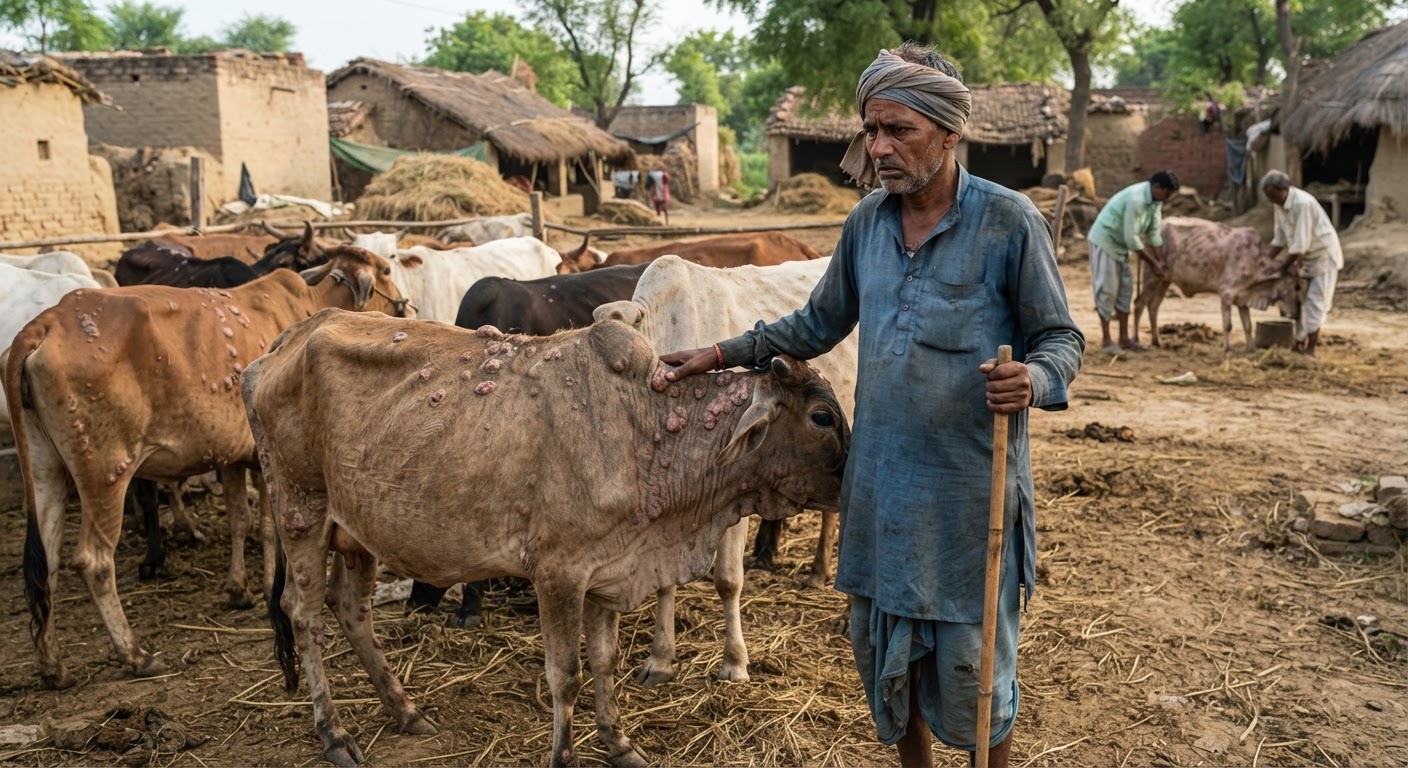
Lumpy skin disease is spreading rapidly among cattle in the Jalalabad area, causing significant concern among local farmers. Officials estimate that between 300 and 400 animals are currently infected with the disease.
Ongoing Vaccination and Treatment Efforts
The Animal Husbandry Department has launched a vaccination drive across villages to control the spread of the infection. Out of the 10,000 vaccine doses received for the block, approximately 5,000 animals have already been vaccinated. Officials expect to administer the remaining doses in the coming days. While there have been reports of cattle deaths in the region, it remains unconfirmed if these were caused by lumpy skin disease or other factors.
Challenges in Veterinary Care
A shortage of doctors is creating challenges for the department in managing the outbreak. Currently, there are no permanent doctors at the four veterinary hospitals and three dispensaries in the Thanabhawan block. The department is managing the situation by attaching doctors from the Shamli block to assist with the workload. Despite these constraints, teams are visiting villages to treat symptomatic animals and educate farmers on safety measures.
Safety Measures in Cow Shelters
Special focus is being placed on preventing the spread of the virus in local cow shelters (Gaushalas). Veterinary officer Munendra Singh stated that cattle in these shelters were vaccinated earlier, and they are currently under constant monitoring to ensure the infection does not reach them.
How Farmers Can Seek Help
Farmers are encouraged to use the 1962 ambulance service for immediate treatment of sick animals. The Department of Animal Husbandry and Dairying advises that if cattle show symptoms such as blisters, lumps, or fever, owners should not ignore them and must contact the 1962 helpline immediately. Early treatment is essential to reduce the risk of mortality. Farmers are also advised to keep infected animals isolated and maintain strict cleanliness in their sheds.