Nagaland Study Warns of Dzüdza River Flood and Erosion Risks
A Nagaland University study warns that the Dzüdza River is highly vulnerable to flash floods and erosion due to environmental pressures.
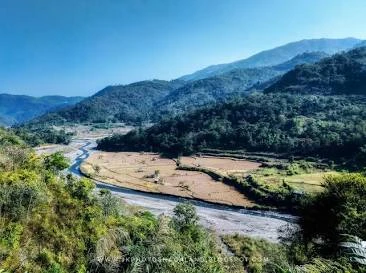
Researchers from Nagaland University have released a critical environmental assessment of the Dzüdza River basin near Kohima, raising alarms over the area's increasing vulnerability. The study highlights a dual threat of flash floods and severe soil erosion, alongside growing concerns regarding water quality and microplastic contamination.
Published in the international journal 'River' by Wiley, the research utilized advanced tools like Geographic Information System (GIS) and Remote Sensing to map the basin's drainage and relief patterns. The findings provide a detailed breakdown of which specific areas are most at risk from hydrological changes.
Mapping Flood and Erosion Vulnerabilities
The research team, led by Sentinungba, Yoh Veswu, and Professor Wangshimenla Jamir, analyzed nine different sub-catchments to identify specific risks. Their data indicates that sub-catchments 3, 5, and 8 are particularly susceptible to flash floods due to higher mean discharge and peak flow rates. In contrast, sub-catchments 1, 2, 7, and 9 were identified as being highly prone to sheet erosion, a process that can strip away vital topsoil.
Beyond the physical movement of water and soil, the study pointed to a deteriorating chemical landscape. The researchers noted that the river is facing significant pressure from the discharge of untreated urban sewage and the heavy accumulation of waste along its banks. The presence of microplastics was also highlighted as a major concern for the long-term health of the local ecosystem.
Nagaland University Vice Chancellor Prof. Jagadish K. Patnaik noted that these findings provide a vital scientific baseline for future land-use planning, soil conservation, and effective watershed management across the state.
While the research team emphasized that these results are preliminary, they serve as an urgent call to action for municipal authorities. To prevent further environmental degradation, the study suggests that more intensive investigations, including rainfall-runoff modeling, are necessary to validate flood risks and implement long-term protection strategies for the region.