China Builds Massive 60GW Hydro Dam Near Arunachal
Satellite imagery reveals China's massive 60GW hydroelectric project near the Arunachal border, sparking water security concerns in India.
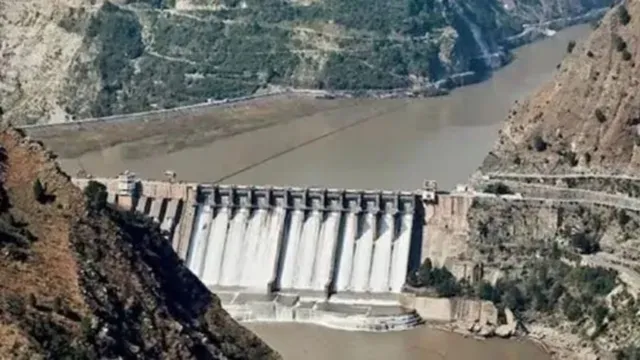
Satellite imagery has confirmed a massive surge in Chinese construction activities just kilometers away from the Indian border. A colossal 60-gigawatt hydroelectric project is being rapidly built on the Yarlung Tsangpo River, located only 40 to 50 kilometers from the Arunachal Pradesh border.
Analysis from EarthSense Labs, an Indian geospatial AI startup, reveals that the project is moving at a significant pace. Imagery captured between July 2025 and August 2026 shows that villages near the main dam site have already been cleared and efforts to divert the river channel are well underway. The project, situated in southeastern Tibet near Medog County and Menling town, is an engineering marvel with a staggering price tag of 1.2 trillion yuan—roughly $168 billion. The design utilizes a 2,000-meter drop over 50 kilometers, incorporating tunnels nearly 40 kilometers long to maximize power output through five cascade stations.
India's Strategic Buffer and Local Resistance
This massive development has raised serious water management and strategic concerns for India. In response, the Indian government has proposed the Siang Upper Multipurpose Project, a 11,200-megawatt facility designed to act as a buffer for the Siang, Upper Siang, and East Siang districts. Arunachal Pradesh Chief Minister Pema Khandu noted that the Siang project's reservoir is designed to hold 9.2 billion cubic meters of water, which would exceed the 5.2 billion cubic meter capacity of the Chinese dam.
However, the proposed solution has met with fierce local opposition. The Adi community has filed a formal petition with Union Home Minister Amit Shah, fearing that the Siang project will lead to mass displacement and the loss of traditional livelihoods. These tensions escalated into violent protests in October, prompting the deployment of the Central Armed Police Forces to manage the unrest. With no formal water-sharing treaty currently in place between India and China, the region remains in a state of high strategic vulnerability.