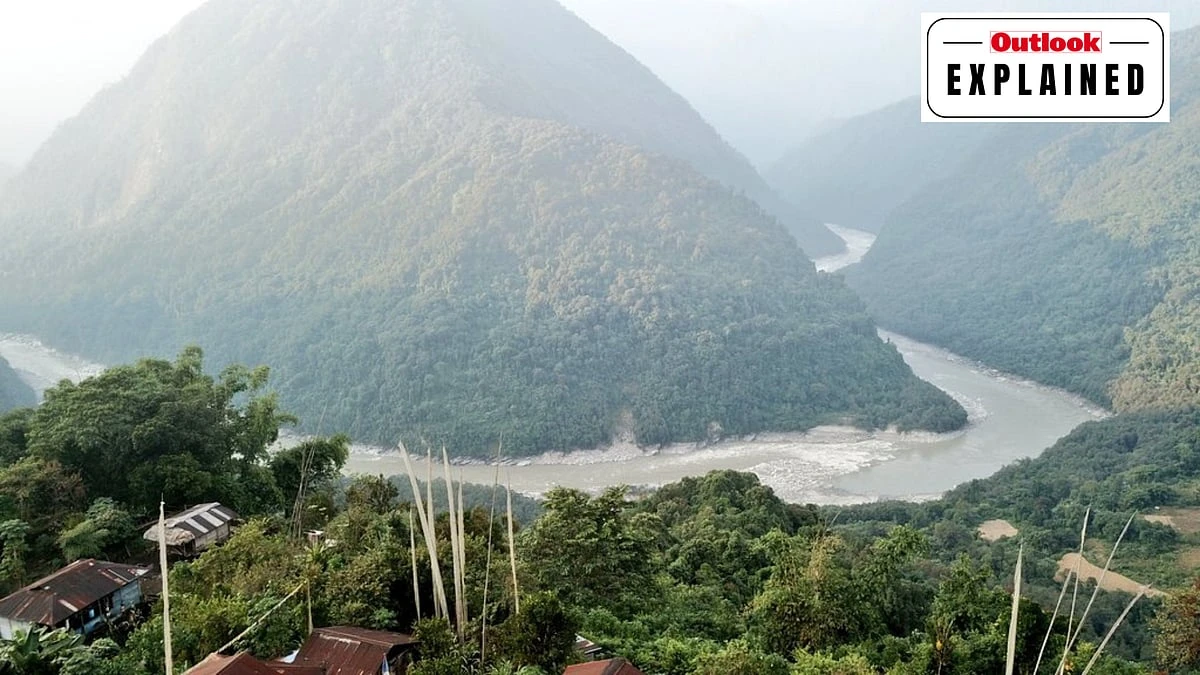
Violent protests erupted in Pasighat within the East Siang district of Arunachal Pradesh following strong local opposition to the proposed 11,200 MW Siang Upper Multipurpose Project. Demonstrators damaged public property and injured security staff, leading the Indian government to deploy 250 personnel from the Rapid Action Force to the region. The unrest occurred during the night of October 23, 2026, and into the early hours of October 24, as protesters set fire to a police station and a National Hydroelectric Power Corporation office. Police vehicles also sustained severe damage during the clashes.
Authorities reported that
more than 40 security personnel suffered injuries due to heavy stone pelting by the crowds. The situation escalated rapidly following a 12-hour bandh called by local groups including the Adi Bane Kebang United, the SUMP Affected Area Youth Association, the Siang Indigenous Farmers Forum Youth Wing, and the Adi Galo Welfare Society.
Protesters specifically targeted the residences of local political leaders, vandalising the homes of BJP state president Kaling Moyong, along with MLAs Oni Panyang and Ninong Ering. Official statements and ongoing updates are tracked by major publications like
Outlook India,
The Times of India,
India Today, and
Livemint.
Official representatives in Arunachal Pradesh describe the project as a critical counter to Chinese developments, noting that China has already commenced construction on the 60,000 MW Medog hydropower complex in Tibet. Proponents claim a large reservoir could help regulate downstream flows and moderate floods in the Siang Brahmaputra basin. However, critics maintain that
the project threatens indigenous lands and ancestral territories, with local Adi community organisations viewing the river as Mother Siang and fearing large-scale displacement. Chief Minister Pema Khandu officially condemned the violence on October 24 and invited youth groups to talks, while local authorities enforced strict prohibitions on gatherings in Pasighat, Mebo, and Ruksin.