Amur Falcons Manipur Migration: Thousands Arrive in Tamenglong
Thousands of migratory Amur falcons have arrived in Manipur's Tamenglong for their annual winter roosting. Strict protection measures are now in place.
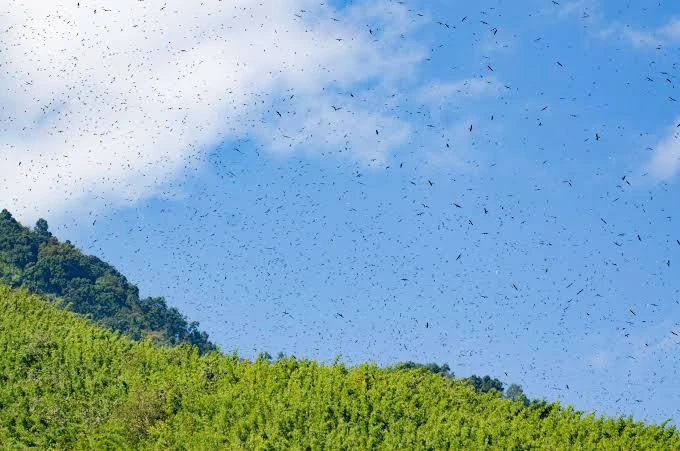
The annual Amur falcons Manipur migration has officially begun, with thousands of migratory raptors arriving in the Tamenglong district. The birds were first spotted along the Guangram and Bhalok hill ridges on October 11, 2026, signaling the start of their winter roosting period in the region.
In an incredible feat of endurance, two satellite-tagged falcons named Apapang and Alang have returned to the area after traveling across 23 different countries. Having arrived on October 22, 2026, these birds are expected to stay in the hills for two to three weeks to build up the fat reserves necessary for their upcoming journey to Southern Africa.
Strict Conservation Measures Implemented
To ensure the safety of these visitors, the local administration has taken decisive action. Tamenglong District Magistrate Dr. L. Angshim Dangshawa issued a prohibitory order under Section 163 of the Bharatiya Nagarik Suraksha Sanhita (BNSS) 2023, which strictly bans the hunting, trapping, or selling of the falcons. As part of this safety protocol, residents in 35 roosting and neighboring villages were required to surrender their air guns to local authorities by October 20, 2026, for safe custody.
The Noney district administration has also implemented similar orders to bolster protection efforts. Union Minister for Environment, Forest and Climate Change, Bhupender Yadav, acknowledged the return of the birds as a major success for conservation efforts. This protection mission is a massive collaborative effort involving the Manipur Forest Department, the Rainforest Club Tamenglong, security agencies, and various local community organizations, with research efforts being led by Wildlife Institute of India scientist Dr. Suresh Kumar.